


Tipus Orbis Universalis (1520) by Petrus Apianus [Wooden Framed Poster]
Tipus Orbis Universalis (1520) by Petrus Apianus [Wooden Framed Poster]
Couldn't load pickup availability
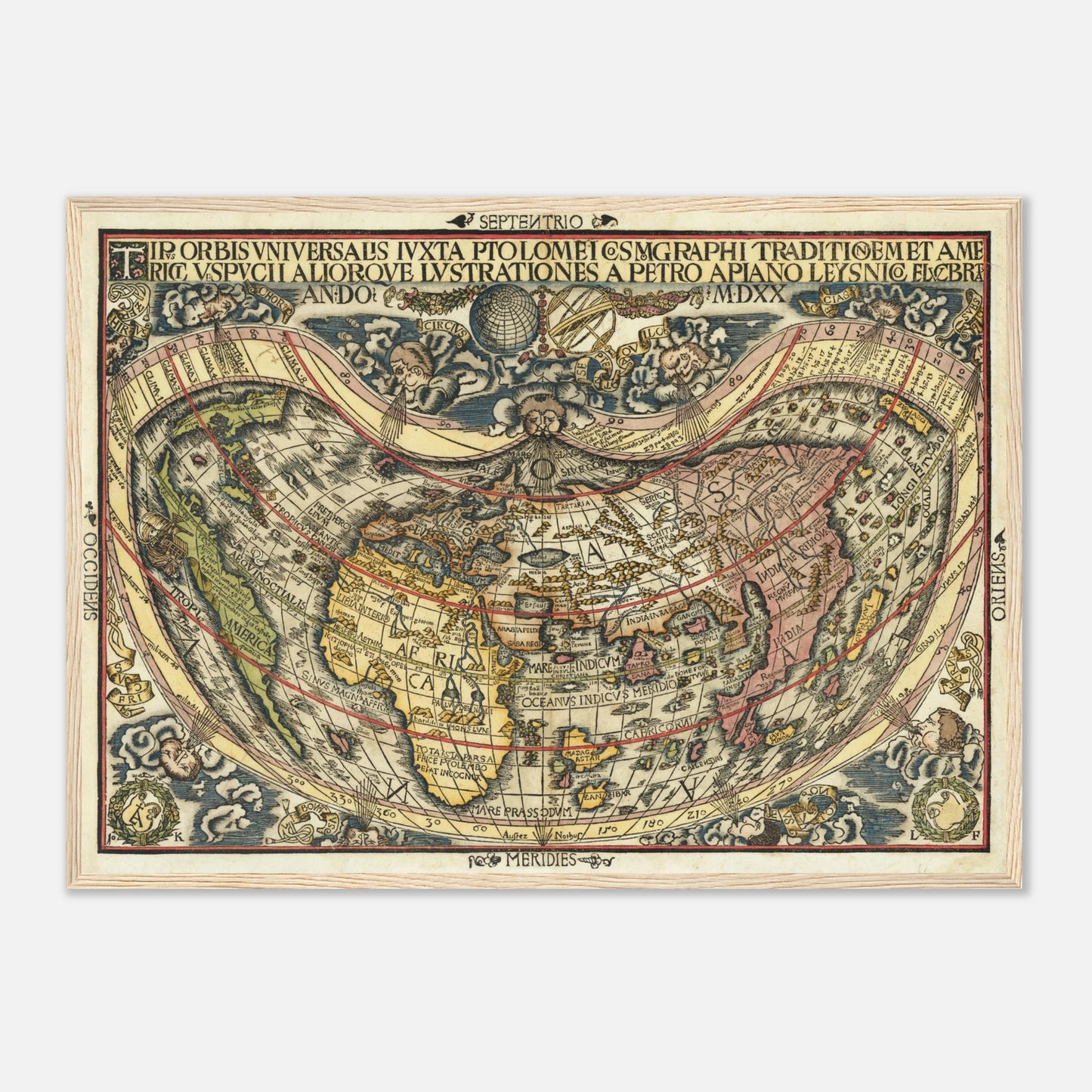
Explore a key moment in early modern cartography with this refined reproduction of Tipus Orbis Universalis, created by Petrus Apianus in 1520. A German humanist and scientist, Apianus combined classical geography with the latest discoveries of his time, producing a map that helped shape Europe's understanding of the world.
Originally published in Vienna as part of Julius Caius Solinus’ Polyhistor, the map features a truncated cordiform (heart-shaped) projection and is among the first to label the New World as "America", based on the voyages of Amerigo Vespucci. It also introduces a passage between the Atlantic and Pacific at South America’s tip—an innovation absent from earlier maps like Waldseemüller’s 1507 edition.
Printed on semi-glossy paper and presented in a sturdy wooden frame, this reproduction faithfully preserves Apianus’ intricate design and Renaissance vision for display in any modern space.
Product Features:
- High-resolution print on 200 gsm semi-glossy paper for vibrant detail and color.
- Durable pine wood frame, offered in four elegant finishes.
- Ready to hang, includes hanging kit for easy installation.
- Shatterproof plexiglass for lasting clarity and protection.
- Sustainable materials, printed on FSC-certified paper for eco-conscious quality.
Perfect for historians, map collectors, and lovers of Renaissance scholarship, this Petrus Apianus world map is more than a decorative piece—it’s a testament to a time when the boundaries of the known world were being redrawn. Add a rare and meaningful artifact of early cartographic history to your space.


Download your free map
Enter your email and tell us how you'll use the map. Your download starts immediately.